
Georgi Tsaklev
Programmer struggling with artCreativity for everyday use
Development Practice
Published on February 05, 2021
To me, creativity is the ability to use knowledge and experience in new ways to solve different problems. This theory is explored by Tanya Krzywinska's video from week 2. She covers how human perception interprets and assumes where there are gaps in the information. This highlights why creativity is characteristic of all human beings, not just a select few. I personally don't tend to think of myself as a creative individual and this definition helps me break through the mental barrier to creativity.
Creativity normally is accessed by having some inspiration present, however often people need to be creative on-demand. This can be achieved through different ideation techniques such as ICEDIP, developed by Geoff Petty (2017).
- Inspiration - generate a large number of ideas, without consideration for the final goal
- Clarification - define the end goals and filter the generated ideas based on them; take what most excites you
- Evaluation - focus on what was good/bad about the concept, consider marketing and future work
- Distillation - focus on the scope of the problem at hand, distil only ideas that can be achieved given the constraints
- Incubation - allow for subconscious thinking about the ideas
- Perspiration - work on the implementation of the distilled ideas
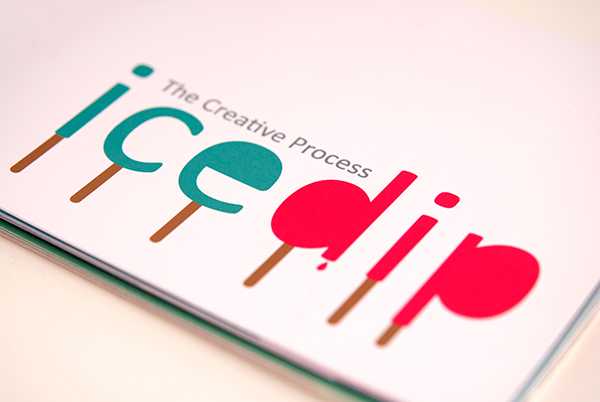
These steps add a rigid structure to the fluid process of creative thinking, ensuring many ideas are captured at the start, filtered and distilled to the ones that make the most sense for the problem at hand, processed subconsciously and finally executed. This rigid structure would be a useful initial exercise during the development of new ideas in the future.
Creativity for humans
During the inspiration phase of ICEDIP, a person can use many different techniques to ideate. Two techniques that I have used in the past are Brainstorming and Mind Mapping. They both provide a fairly flexible structure to ideation and can be used by both teams and individuals. However, I find Brainstorming works better in teams while Mind Mapping works better for individuals.
Through my practice, I've always explored the idea that no single tool or technique is perfect and a cleverly created hybrid would perform better for the specific team, individual or situation it was created for. Additionally, such variety is proven to increase team engagement in a given activity (Ng et al., 2019). I will continue to experiment with different combinations of ideation techniques throughout my master's courses in order to find new techniques that work better for me and the teams I will be part of.
Creativity for machines
The idea that creativity is exclusively a characteristic of humans has been challenged by Machine Learning. Computers are also given the ability to "learn" from a given dataset and then apply what was learned to new unknown datasets (Mohri et al., 2018). The famous quote by Ted Nelson "The good news about computers is that they do what you tell them to do. The bad news is that they do what you tell them to do." still applies. However, computers are able to interpret new information on the basis of previously observed, which maps back to our original definition of creativity.
Combining the power of Machine Learning with the theory behind Computer Vision can lead to computers exercising some creativity (Calton and Wiggins, 2012). However, how we use it can dictate whether this computational creativity is a useful goal to pursue.

When a person struggles with a certain creative task, they need some inspiration to get them going. This inspiration can be hard to get, but the structured approach of ideation techniques can help mitigate this. I see huge potential in Computational Creativity in helping people with their creative tasks. Computers can bend and blend ideas in new, unimaged before ways, and spark the needed creative blaze.
Furthermore, computational creativity can also be utilised to generate new and interesting encounters in video games. This is highly useful in Roguelike games. I am going to be exploring this idea further, as generating new and unique experiences every time a game is played increases exponentially the replayability (Cerny and Dechterenko, 2015).
References
Cerny, V. and Dechterenko, F., 2015, September. Rogue-like games as a playground for artificial intelligence–evolutionary approach. In International Conference on Entertainment Computing (pp. 261-271). Springer, Cham.
Colton, S. and Wiggins, G.A., 2012, August. Computational creativity: The final frontier?. In Ecai (Vol. 12, pp. 21-26).
Mohri, M., Rostamizadeh, A. and Talwalkar, A., 2018. Foundations of machine learning. MIT press.
Ng, Y.Y., Skrodzki, J. and Wawryk, M., 2019. Playing the sprint retrospective: a replication study. In Advances in Agile and User-Centred Software Engineering (pp. 133-141). Springer, Cham.
Petty, G., 2017. How to be Better at... Creativity. Lulu. com.
If you like it, share it!