Georgi Tsaklev
Programmer struggling with artRapid Ideation Session 1 - Results
Development Practice
Published on March 05, 2021
The Rapid Ideation Session 1 officially ended this Wednesday. At the start of the two-week-long session, I wrote about the goals I would like to achieve. Now is the time to review and reflect on what I have managed to achieve.
Execution
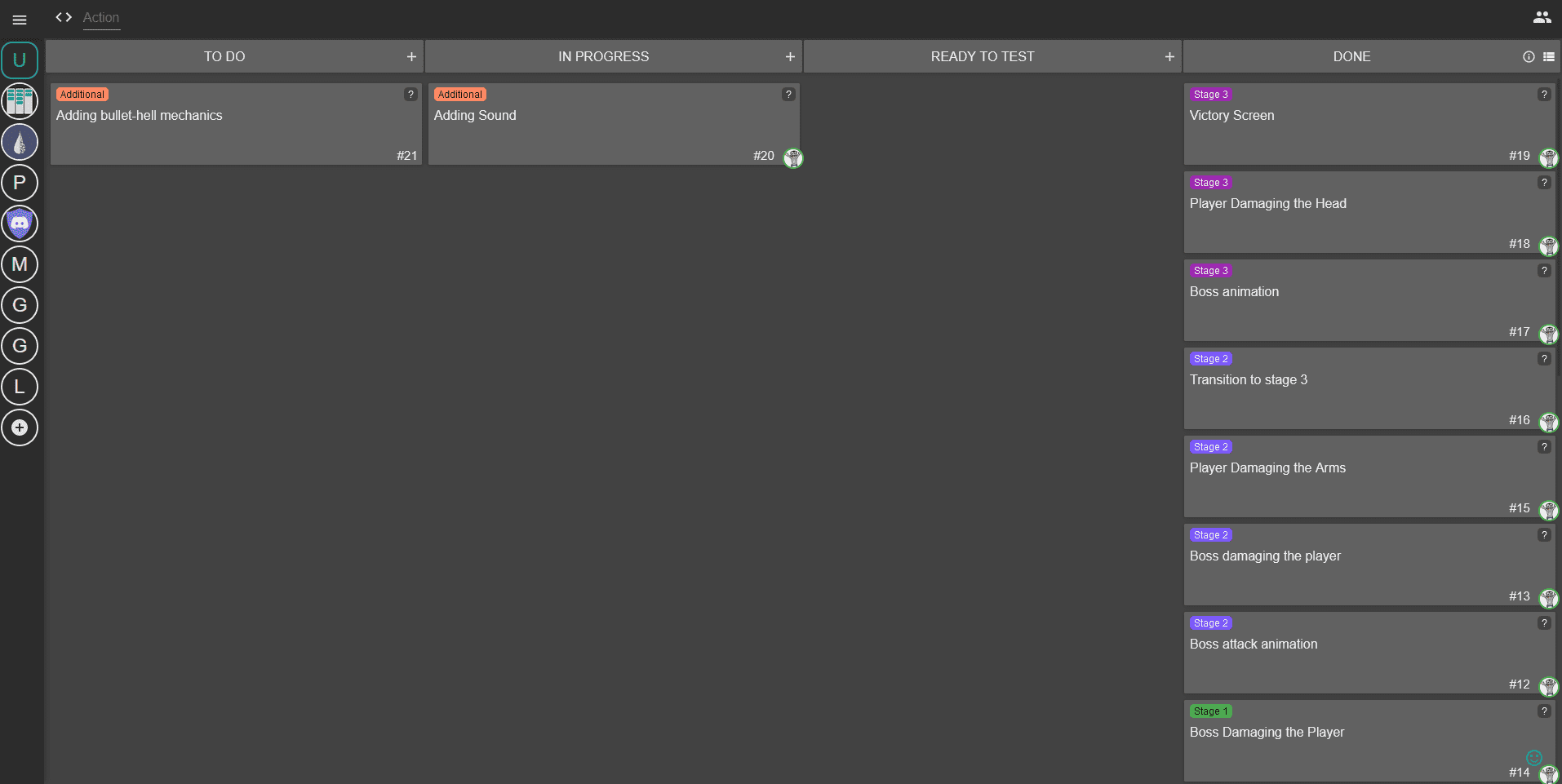
I followed my plan from the start and put the individual steps of the boss fight level I wanted to prototype into a Kanban board. I used my own website LetScrum for the job, as while it is a Scrum board, it can easily be used as a Kanban board as well.
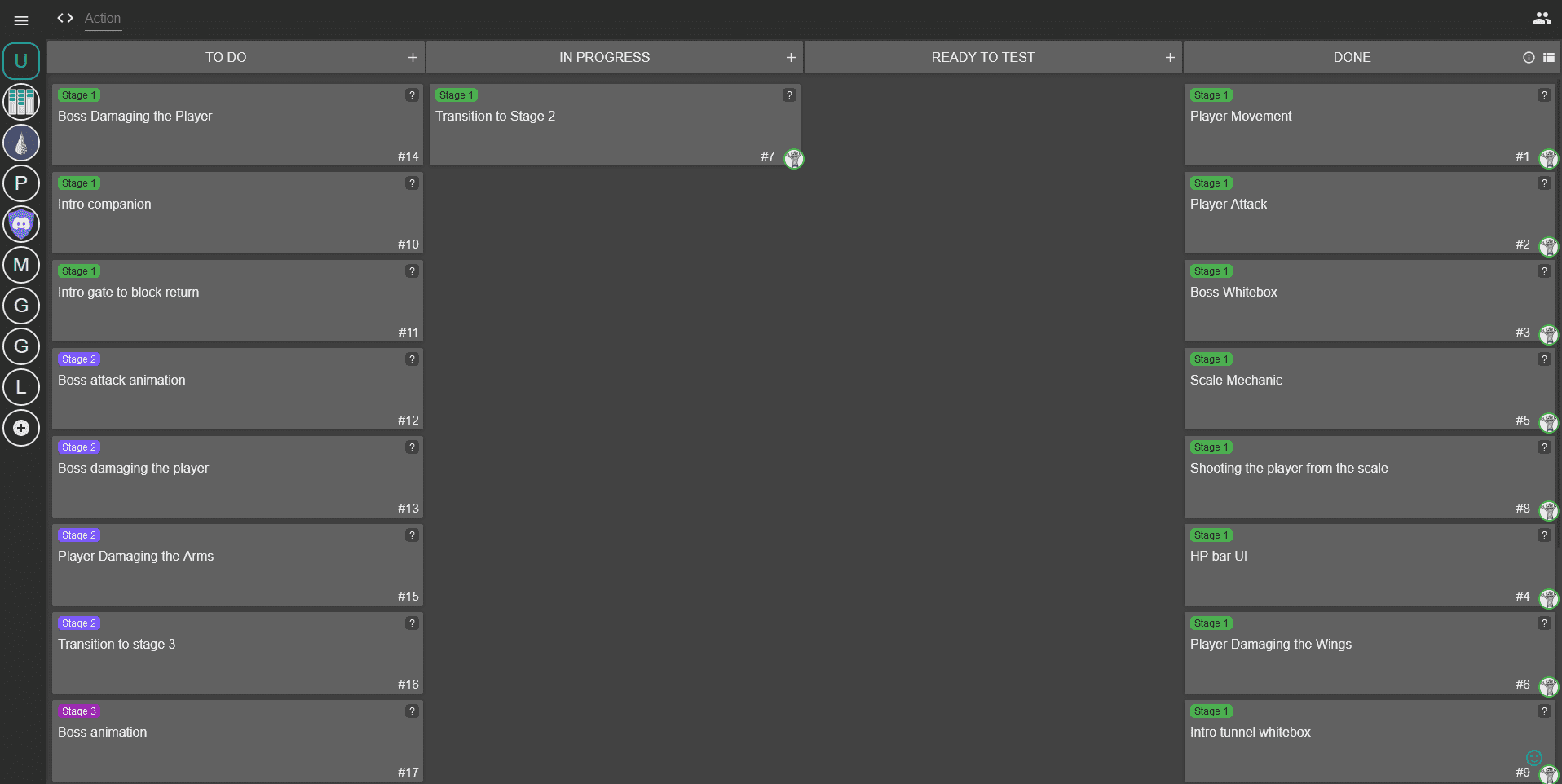
Having the tasks visualised on the board helped me prioritise them and this way I could pick up the next task from the top without having to evaluate my priorities each time.
As I am fairly used to Unity, I wanted to gain experience working with the other most common game engine - Unreal Engine. This was the most daunting goal I had set for myself as I had no previous experience with it. I spent some time getting familiar with the most basic concepts prior to starting the Rapid Ideation session. However, I was trying to structure the game the same way I would in Unity. This created a lot of confusion and frustration until I figured out the "Unreal" way.
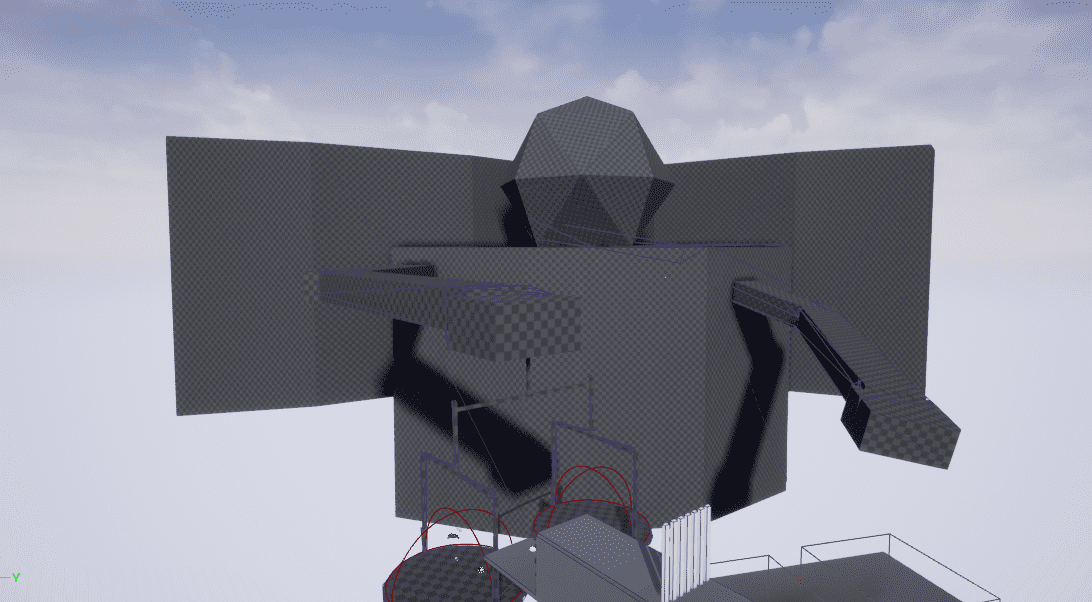
The prototype started with a simple whitebox version of the boss with some of its key features - the wings and the scale. I took some free assets from the Unreal Engine Marketplace. The assets used are from the Paragon game, which after its cancellation had all assets released to the public for free use in the Unreal Engine. I was only able to use a model for the playable character. When I tried to replace the whitebox enemy model with another one it proved quite difficult with my limited knowledge and would have taken too much time. Instead, I focused on polishing the player experience through the fight.
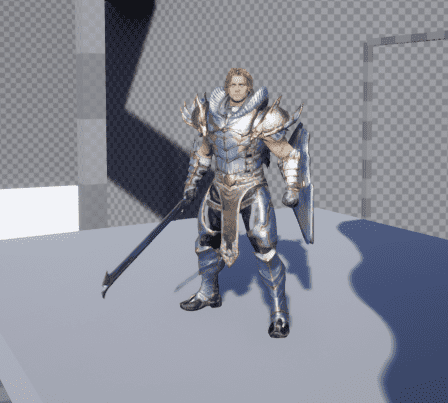
In the end, I managed to prototype the full fight I designed at the start of the Ideation Session, apart from the "bullet-storm" mechanics to keep the player busy between the enemy's attacks and sound. A playthrough video can be seen below.
Goals
At the start of the Rapid Ideation session, I committed to the following three goals.
| Goal | Goal 1 | Goal 2 | Goal 3 |
|---|---|---|---|
| Specific | Gain experience with Unreal Engine | Improve in areas other than programming | Work on "the end" of a game |
| Measurable | The final prototype should be built using Unreal Engine | Use the !Coding diversifier and don't write any code | The final prototype should be of the ending of a game rather than the first level |
| Achievable | The engine is free to use and has a lot of training resources online | Unreal Engine has a very powerful visual scripting language called Blueprint | The theme is very generic so I need to focus on what would be the experience at the end of the game instead of the start |
| Relevant | Knowing more than one game engine is essential for my career aspirations of having my own studio as it would remove this restriction |
Indie game developers have to wear a lot of hats. This goal will improve my skills in areas I am not as proficient in | So far all of my game prototypes encompass the start initial levels of games, where the player is introduced to the mechanics. It is important to gain experience for developing other parts of games. |
| Timely | To be achieved over the two weeks of Rapid Ideation Session 1 | ||
While I learned a lot from working with the Unreal Engine, I believe it may have been at the expense of other goals. My first goal was to gain experience with the Unreal Engine, which I am confident I achieved. There is always more to learn when working with such a complicated tool, however, I gained a good basis to further develop my skills in the future.
The second goal was to improve in areas other than programming. I can't confidently say I have achieved it as the only area I feel I have improved is game design, which was mostly during the planning section before I started prototyping. The reason for this was my false expectation of how easy it would be to work with the Unreal Engine. I spent too much time trying to implement simple mechanics that I had to choose between achieving this goal and finishing the prototype. I would revisit this goal in the future, potentially in a different scenario. If I take a non-programmer role in a team project I would have the freedom to fully develop in that role instead of rushing and sacrificing parts while working by myself.
Lastly, I wanted to work on the ending of a game. I achieved this goal by focusing on it as part of the ideation at the start, making sure it is accounted for in the design. It was very educational to design the ending of a game rather than the initial introduction of mechanics to the player. I had to consider why the player was there and to justify their actions. I even wrote a short dialogue to provide background for the fight, which was something I've never done before.
In summary
Despite not completing all of the goals I set at the start of the rapid ideation session, I learned a lot about designing and prototyping different parts of games and the basics of Unreal Engine. I have identified new ways to address what I failed to achieve and look forward to the next Rapid Ideation Session.
References
Epic Games. 2021. Unreal Engine. [Software]
If you like it, share it!